
UNHCR and World Together Expand Vocational Training for Young Refugees in Ethiopia
Technical education creates new opportunities for young urban refugees
August 31st, 2026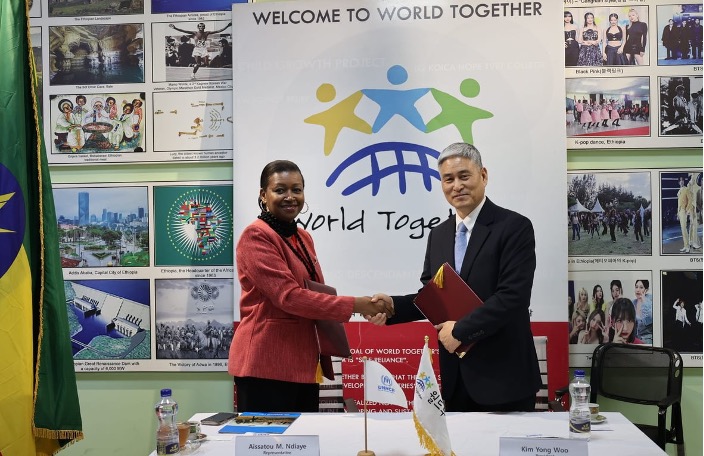
UNHCR, the UN Refugee Agency, and World Together have signed an agreement in Addis Ababa to expand vocational training opportunities for young refugees in Ethiopia. The partnership will help urban refugees access technical education and develop skills for employment and greater self-reliance. The agreement was concluded during a visit by the President of World Together to the LG-KOICA Hope TVET College graduation ceremony.
The two organisations plan to create routes for refugees to enrol in fully funded vocational programmes in electronics and information and communications technology. Training will take place at the LG-KOICA Hope TVET College, with the first intake potentially beginning in December 2026, subject to operational readiness. UNHCR will support outreach and awareness activities through local secondary schools, government authorities and partner organisations to make information about the programme accessible to refugee communities.
The partnership brings together experience from humanitarian work, international development and technical education. World Together has operated in Ethiopia since 2007 and manages the LG-KOICA Hope TVET College, established in 2014 through cooperation involving the Korea International Cooperation Agency and LG. The college combines vocational education with internships and employment support, linking classroom training with practical experience and opportunities to enter the labour market.
The programme is particularly relevant for refugees living in urban areas. Ethiopia hosts more than 70,000 urban refugees in Addis Ababa, while access to technical training and sustainable livelihoods remains limited. The initiative also supports the Ethiopian Government's Makatet roadmap, which seeks to include refugees in national systems. In this context, vocational education offers a practical way to strengthen participation while reducing barriers between displaced communities and the institutions of their host country.
The agreement between UNHCR and World Together shows how cooperation across humanitarian, educational and development institutions can create longer-term opportunities for displaced young people. Rather than focusing only on immediate assistance, the programme connects education with employment, local institutions and wider social participation. By giving refugees greater access to established training structures, the partnership adds an educational dimension to international cooperation and supports closer engagement between refugee communities and Ethiopian society.
