
UNESCO Opens Exhibition on Africa and Its Diaspora in Paris
African heritage and memory connect history with a culture of peace
September 09th, 2026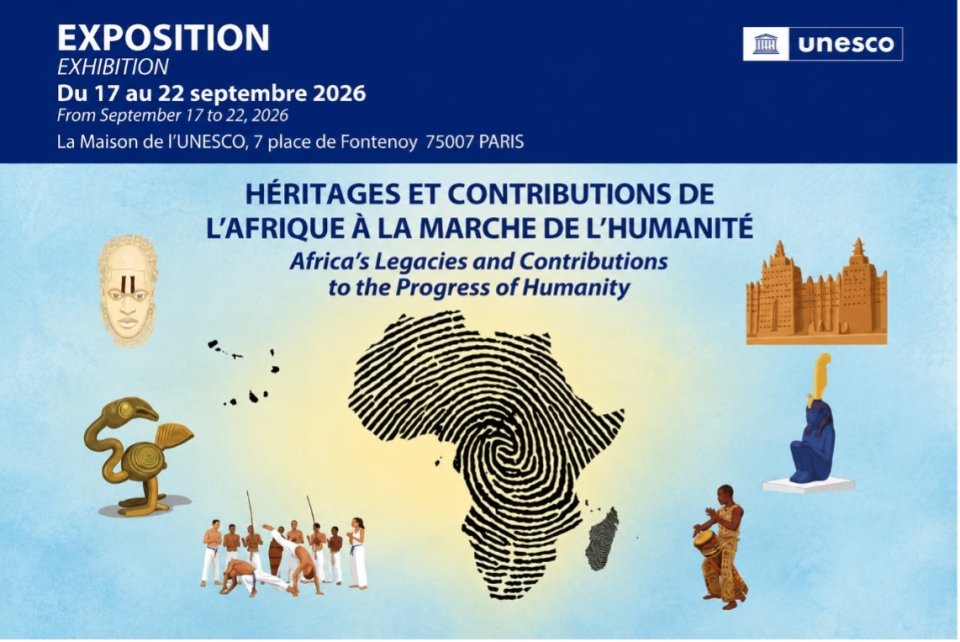
UNESCO will host the anthological exhibition “Cultural Heritage and Historical Contributions of Africa and Its Diaspora to the Progress of Humanity” at its Paris headquarters from 17 to 22 September 2026. Drawing on the General History of Africa programme, the exhibition will examine the continent’s place in world history and connect historical memory with UNESCO’s wider work on dialogue, shared humanity and a culture of peace.
The exhibition will trace a broad historical journey from humanity’s African origins to contemporary challenges facing Africa and the wider world. Its themes include African contributions to science, knowledge and civilisation, as well as political, economic and cultural developments, the slave trades and their consequences, resistance, diasporas, Pan-Africanism and decolonisation. Photographs, archival documents, maps, publications, iconography and audiovisual resources will be used to bring different periods and regions into dialogue.
A central element of the initiative is UNESCO’s General History of Africa, which presents the continent’s past from African perspectives while placing Africa and its diasporas within the broader history of humanity. The exhibition highlights locations and movements including Timbuktu, Aksum, Great Zimbabwe, the Haitian Revolution, Pan-African congresses, independence movements and the struggle against apartheid. In this context, historical knowledge becomes a means of intercultural dialogue, connecting African experiences with global audiences.
The programme also links the exhibition with UNESCO’s broader Culture of Peace agenda. A high-level event on 21 September will consider how historical research and collective memory can contribute to dialogue, mutual understanding and more inclusive societies. The exhibition comes ahead of the fourth Biennale of Luanda – Pan-African Forum for the Culture of Peace and Non-Violence, scheduled for 22 and 23 October in Angola and co-organised by the Government of Angola, the African Union and UNESCO.
By presenting African heritage alongside the experiences of its diasporas, the exhibition demonstrates how museums, archives and historical research can contribute to cultural diplomacy. It creates a framework in which memory is not treated only as a record of the past, but also as a resource for education, international understanding and dialogue between communities. Such an approach reflects Berlin Global’s editorial emphasis on cross-cultural interaction, institutional cooperation and the diplomatic importance of cultural exchange.
