
UNESCO Launches Digital Learning Week on the Future of Education
Ministers and educators meet in Paris to discuss AI and education
August 31st, 2026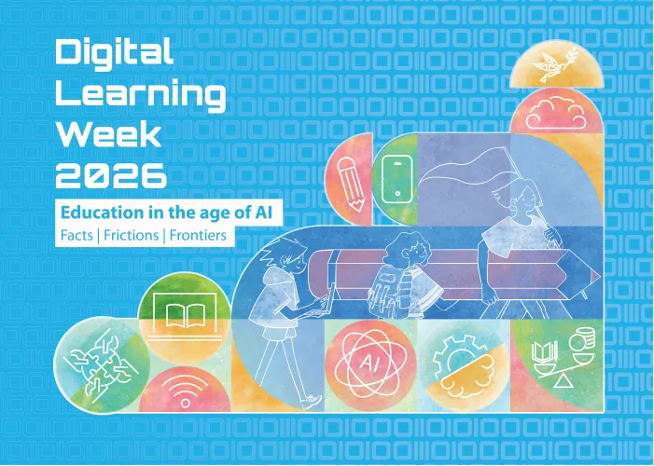
UNESCO will convene Digital Learning Week from 8 to 11 September 2026 at its headquarters in Paris, bringing together more than 25 education ministers alongside experts, technology representatives, educators and students from around the world. Under the theme “Education in the age of AI: Facts | Frictions | Frontiers”, the annual meeting will examine how artificial intelligence is reshaping education and the policies needed to guide its use.
More than 1,000 participants are expected to attend at UNESCO Headquarters, with thousands more joining online. Discussions will centre on three areas: determining what counts as fact in an age of synthetic knowledge, examining the challenges AI creates within education systems, and considering new technological frontiers. The programme includes plenary discussions on AI safety, human learning, teachers, higher education and governance, bringing together perspectives from different educational and professional settings.
A central outcome of the week will be a joint Ministerial statement on sustaining education as a common good in the age of AI. UNESCO will also launch a collection of policy briefs addressing issues including AI safety, sovereignty, procurement, cost models and age-appropriateness. By placing ministers, educators, researchers and technology specialists in the same international forum, the meeting creates space for policy exchange across countries and educational systems facing similar technological questions.
The programme will also connect global policy discussions with research and educational practice. UNESCO plans to present new findings from its annual survey of UNESCO Chairs on emerging trends in AI and higher education, while the UNESCO King Hamad Bin Isa Al-Khalifa Prize for the Use of ICT in Education will recognise work related to creativity and critical thinking with AI. Sessions will further examine teachers’ roles and the relationship between students, educators and technology.
Digital Learning Week reflects UNESCO’s wider effort to develop common approaches to emerging technologies through international cooperation. Its focus on shared standards, educational priorities and participation from different regions gives governments and education communities an opportunity to exchange experience while considering the social and cultural implications of AI. As digital technologies increasingly cross national boundaries, such dialogue provides a platform for building mutual understanding around how education should adapt while remaining inclusive, ethical and centred on learners.
