
Stories that Connect: Southern Africa's Heritage Diplomacy
UNESCO training in Zimbabwe rethinks the narrative of cultural heritage
September 01st, 2026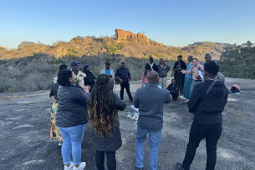
Representatives from Botswana, Eswatini, Lesotho, Namibia, South Africa and Zimbabwe came together in Bulawayo, Zimbabwe, from 27 to 31 July 2026, for a regional training on heritage interpretation and storytelling centred on the nearby Matobo Hills World Heritage Site. The training explored a question that goes beyond the preservation of monuments and landscapes: how can heritage sites tell stories that truly connect with people? Participants worked to develop new approaches to presenting cultural heritage to visitors and local communities.
The training was organised as part of the Africa–Europe Partnerships for Culture: Promoting Culture and Heritage-based Sustainable Tourism in Southern Africa project. Funded by the European Union and implemented by UNESCO together with the Goethe-Institut, the initiative promotes cultural cooperation, sustainable tourism and community participation. The training itself was delivered in collaboration with Interpret Europe, with technical support from the African World Heritage Fund. Participants explored new ways of sharing heritage through guided tours, community storytelling and digital interpretation, while ensuring that local voices and knowledge remain central to the stories being told.
The initiative also highlights an important dimension of cultural diplomacy. By bringing together heritage professionals from across the region and connecting them with European institutions through the European Union–UNESCO–Goethe-Institut partnership, the programme creates a platform for regional and international exchange. Cultural diplomacy is therefore not limited to exhibitions or festivals: it can also involve giving communities the skills and opportunities to represent their own cultures internationally.
The next stage of the project will see participants develop interpretation and storytelling frameworks for their individual heritage sites in cooperation with local communities. Ultimately, the initiative demonstrates that protecting cultural heritage is not only about preserving historic places, but also about ensuring that the people connected to them have the opportunity to tell their own stories—and share them with the world.
